 |
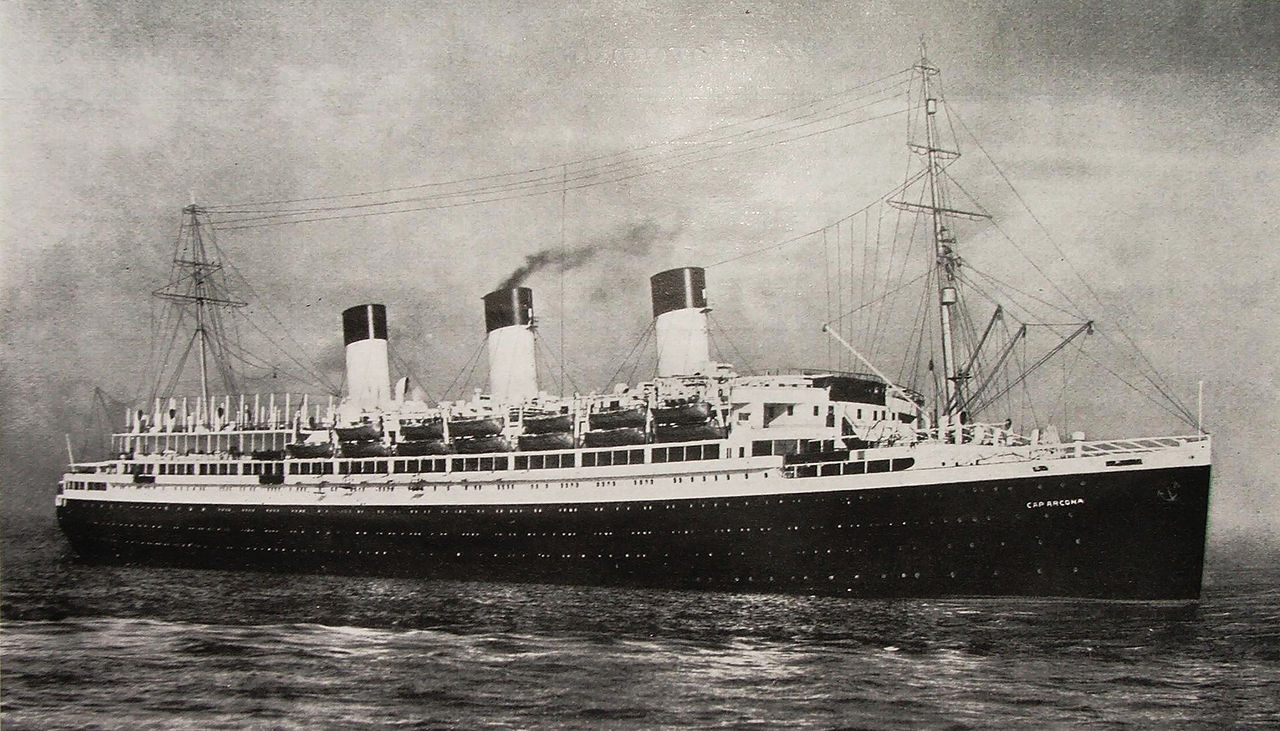
| ss Cap Arcona - (postcard view - author's collection) |
Over the years, apart from the Blitz, this blog has looked at many other aspects of Second World War including some of the many tragic occurrences during the War at Sea that inevitably involved civilians or other innocent parties. These events included the loss of Italian prisoners of war aboard the Arandora Star which we looked at in July 2010, soldiers of the British Expeditionary Force and other refugees aboard the Lancastria which was covered in May 2011 as well as the loss of the Athenia carrying Americans attempting to escape the outbreak of war in Europe.
All of these tragedies have involved British vessels which were sunk by German forces and which with the exception of the 'own goal' involving the Arandora Star and her 'cargo' of Italian POWs, all of the victims were either British, Allied or in the case of the Athenia, neutral citizens as the Americans were at that very early stage of the war.
It is often overlooked that German ships carrying evacuees of that country, both military and civilian were sunk, with massive loss of life during the latter days of the war. One such vessel, the Wilhem Gustloff was sunk by a Soviet submarine in January 1945 and holds the melancholy record of being the greatest maritime disaster in history, with deaths estimated at over 9,300, including some 5,000 children. This story is about to be recounted by the renowned author Roger Moorhouse in a forthcoming book and will be reviewed here in due course. There was another disaster, a very private tragedy which has been frequently overlooked, which occurred right at the very end of the war in Europe on 3rd May 1945 and which involved the most hapless and helpless of all possible victims - concentration camp prisoners from Neuengamme.
Before the war, the steamship Cap Arcona had been known as the 'Queen of the South Atlantic' and was the largest and fastest vessel of the Hamburg South America Line's service between Hamburg, Buenos Aires and other ports on the eastern coast of South America. Entering service in 1927 and built at the famous Blohm + Voss shipyard in Hamburg, she could carry 1,315 passengers, including 575 in First Class, whose passengers enjoyed excellent cuisine, comfortable accomodation and amenities such as a full sized tennis court.
In 1940, the Cap Arcona was requisitioned by the Kriegsmarine and sent to Gotenhafen, the Nazis name for Gdynia in occupied Poland, where she was used as an accomodation ship. In 1942, she was used as an enormous film prop in a Nazi production about the sinking of the Titanic. In 1945, she was used as part of Operation Hannibal, the evacuation of German military personnel and civilians from East Prussia, which was being steadily overrun by the advancing Soviets. This was the same operation that claimed the Wilhelm Gustloff mentioned above. The Cap Arcona was able to evacuate almost 26,000 people to the relative safety of Hamburg and occupied Denmark in several voyages. These voyages were fraught with danger and apart from the Gustloff, over 150 other vessels fell prey to Soviet submarines and other naval craft. So stressful were the conditions that on 20 February 1945, Johannes Gertz, the Captain of the Cap Arcona, shot himself in his cabin rather than face another such voyage. By the end of March 1945, the old liner had made her final voyage to Copenhagen. She was worn out and could not be made properly seaworthy other than by a complete refit, which was impossible in the conditions prevailing in a Third Reich which by this time was in it's death throes.
 |
| A Neuengamme inmate being used for 'Bomb Disposal' work in Hamburg - August 1943 (Mahnmal St Nikolai) |
There was however, one final, shameful, mission in store for the battered old liner - the evacuation of prisoners from Neuengamme Concentration Camp, near Hamburg. Established in 1938, Neuengamme was estimated to have held a total of some 106,000 prisoners during it's existence, of whom about half were estimated to have perished. By the end of 1944, the number of prisoners was estimated at around 49,000 with about 12,000 at Neuengamme itself, with the remainder held at subsidiary camps in the surrounding area. The British had already discovered and liberated Belsen Concentration Camp and had made public the worst excesses of the Nazi regime. Heinrich Himmler, Reichsfuhrer SS, and the man ultimately responsible for these camps, still harboured delusions of being able to cut a separate deal with the British and Americans with himself as head of state of a Germany that would soon be fighting the Russians alongside the Western Allies. Such was his delusion, he was determined that no further camps would fall into the hands of the British or Americans and that all inmates would either be evacuated into Sweden, through the White Bus scheme, brokered by the Swedish Red Cross, or quietly placed aboard vessels such as the Cap Arcona, where they were placed below decks with the eventual intention of moving them to a new camp in Norway. The White Bus operation had initially been aimed solely at Scandinavian inmates and although quickly expanded to include other nationalities, the majority of those imprisoned aboard the Cap Arcona were Poles, Latvians and other Eastern Europeans.
Whilst Himmler in Berlin had given the order to remove the remaining inmates, the actual execution of the plan fell to others. Karl Kaufmann was the Nazi Gauleiter for Hamburg and it was he that came up with the idea to move the inmates to the Cap Arcona and three other vessels that were anchored and empty in Lubeck Bay. He felt that these vessels would be ideal for the task and perhaps he felt that they could be quietly sunk, with their human cargo onboard and thus removing any evidence to the soon to be arriving British.
It was 26 April 1945 when the first batch of prisoners were brought on board Cap Arcona but unlike the vessel's pre-war passengers who were given only the finest service, these poor unfortunates were herded deeper and deeper into the ship's holds, which never having been designed for this function, were cold, damp and unsanitary. The SS guards took great care to remove all life belts, rafts and anything else that could aid a drowning person. It was the same story aboard the other vessels and although various rumours filtered amongst the prisoners that they were being embarked as a prelude to evacuation to neutral Sweden, something which Gauleiter Kaufmann himself declared after the war at his War Crimes trial, the fact that none of the ships had been declared to the Red Cross, or had been given appropriate markings, it is hard to believe that this was a credible option. It becomes even less believable when one remembers the condition of the Cap Arcona and the other vessels as being barely seaworthy.
On 1 May 1945, the vessels anchored in Lubeck Bay had caught the attention of the RAF when the pilot of a Hawker Typhoon of 83 Group reported that an evacuation fleet was gathering off Lubeck. As the ships hadn't been declared to the Red Cross, the answer to the RAF Intelligence officers was simple - the British Army were closing in and the Germans were seeking to evacuate to Norway in order to continue the fight. The seeds of tragedy had been sewn.
On 2 May 1945, the British reached Lubeck and discovered the now empty Concentration Camp at Neuengamme. Because Lubeck had been used as an evacuation port, it contained an office of the International Committee of the Red Cross and the representative here, Mr De Blonay, informed Major General 'Pip' Roberts of 11th Armoured Division of his understanding that between 7,000 and 8,000 prisoners were detained on board the ships anchored in Lubeck Bay.
On board those ships, hopes amongst the prisoners began to rise; earlier on 2 May, the final prisoners were brought on board by barge, this time from another camp near Danzig and although many of them had died on the voyage due to the appalling conditions on the barges, the survivors were brought on board the Cap Arcona, which now had over 4,500 crammed inside her holds. Captain Bertram, the ship's captain refused to take any more prisoners and vehemently informed the SS Guards as much. Whilst these final prisoners were being loaded, firing could be heard ashore and the SS Guards, were becoming jumpy and visibly scared as perhaps their thoughts turned to what might happen to them once their human cargo was discovered by the advancing British soldiers.
Despite the fact the Major General Roberts had been made aware of the possibility of prisoners being aboard the ships in Lubeck Bay, the war was now moving too fast for information to filter through and RAF operations against shipping in the Baltic had gathered their own momentum and as far as the pilots of 83 Group were concerned, the ships contained elements of the hated SS or important Nazis fleeing either to the new seat of government in Flensburg or trying to escape to neutral Sweden.
So it was on the morning of 3 May 1945, Typhoons of 184, 193, 197, 198 and 263 Squadrons dived in to attack the assembled fleet. Each of the renowned ground attack fighters carried four 20 mm cannon and either two 500 lb bombs or eight 60 lb unguided rockets. As the attack began, the SS guards began to abandon ship, unlocking the life preservers that they had saved for themselves and jumping over the side. Some prisoners managed to get themselves on deck and one, Erwin Geschonneck, a German political prisoner, witnessed a man armed with a machette, flailing his way through the crowd and cutting down anyone who impeded him; this was Captain Bertram, who together with his crew and officers, were amongst the first over the side. Geschonneck also witnessed one SS man, armed with two revolvers, firing off his guns until the ammunition was spent, at which point he was overrun and trampled to death by his former prisoners, more and more of whom had managed to break out of the holds and reach the deck.
By now the Cap Arcona was ablaze and those who could not reach the deck and were trapped below were consumed by the flames in appalling scenes. Many of those in the sea fared little better; a small fleet of rescue boats approached the burning ships but any prisoners hoping for rescue were invariably shot as the boats were being sent to rescue SS guards and crewmembers only. Fortunately, some managed to get themselves picked up, whilst others struggled ashore, where they were 'greeted' by German sailors, some of whom were as young as 16 years of age. Fortunately, these sailors looked after the survivors and later that same day, they were liberated by the British.
The few that made it ashore were in a very lucky minority. Of some 8,500 prisoners on board the Cap Arcona, Deutschland and Thielbek, at least 7,500 perished, although the actual number will never be known. It is thought that some thirty nationalities were on board the prison ships and as well as men, women and children from all of the Nazi occupied countries, there were also victims from American, Britain and Canada, as well as Swiss, Spanish and Italians. Victims were washed ashore for weeks after the attacks and are today buried in mass graves at Neustadt, Scharbeutz and Timmerdorfer Strand. Human remains were still being washed up as recently as 1971.
Even 71 years after the end of the war, which came just days after the "Shipping Strike" attack, this remains a little known tragedy, the result of a genuine mistake casued by the fog of war at the end of the European conflict.
Published Sources:
Monty's Greatest Victory: The Drive for the Baltic April-May 1945, Charles Whiting, Pen & Sword 2002
Unpublished Sources:
197 Squadron Operations Record Book - National Archives Kew AIR 27/1169/53
Whilst Himmler in Berlin had given the order to remove the remaining inmates, the actual execution of the plan fell to others. Karl Kaufmann was the Nazi Gauleiter for Hamburg and it was he that came up with the idea to move the inmates to the Cap Arcona and three other vessels that were anchored and empty in Lubeck Bay. He felt that these vessels would be ideal for the task and perhaps he felt that they could be quietly sunk, with their human cargo onboard and thus removing any evidence to the soon to be arriving British.
It was 26 April 1945 when the first batch of prisoners were brought on board Cap Arcona but unlike the vessel's pre-war passengers who were given only the finest service, these poor unfortunates were herded deeper and deeper into the ship's holds, which never having been designed for this function, were cold, damp and unsanitary. The SS guards took great care to remove all life belts, rafts and anything else that could aid a drowning person. It was the same story aboard the other vessels and although various rumours filtered amongst the prisoners that they were being embarked as a prelude to evacuation to neutral Sweden, something which Gauleiter Kaufmann himself declared after the war at his War Crimes trial, the fact that none of the ships had been declared to the Red Cross, or had been given appropriate markings, it is hard to believe that this was a credible option. It becomes even less believable when one remembers the condition of the Cap Arcona and the other vessels as being barely seaworthy.
On 1 May 1945, the vessels anchored in Lubeck Bay had caught the attention of the RAF when the pilot of a Hawker Typhoon of 83 Group reported that an evacuation fleet was gathering off Lubeck. As the ships hadn't been declared to the Red Cross, the answer to the RAF Intelligence officers was simple - the British Army were closing in and the Germans were seeking to evacuate to Norway in order to continue the fight. The seeds of tragedy had been sewn.
On 2 May 1945, the British reached Lubeck and discovered the now empty Concentration Camp at Neuengamme. Because Lubeck had been used as an evacuation port, it contained an office of the International Committee of the Red Cross and the representative here, Mr De Blonay, informed Major General 'Pip' Roberts of 11th Armoured Division of his understanding that between 7,000 and 8,000 prisoners were detained on board the ships anchored in Lubeck Bay.
On board those ships, hopes amongst the prisoners began to rise; earlier on 2 May, the final prisoners were brought on board by barge, this time from another camp near Danzig and although many of them had died on the voyage due to the appalling conditions on the barges, the survivors were brought on board the Cap Arcona, which now had over 4,500 crammed inside her holds. Captain Bertram, the ship's captain refused to take any more prisoners and vehemently informed the SS Guards as much. Whilst these final prisoners were being loaded, firing could be heard ashore and the SS Guards, were becoming jumpy and visibly scared as perhaps their thoughts turned to what might happen to them once their human cargo was discovered by the advancing British soldiers.
Despite the fact the Major General Roberts had been made aware of the possibility of prisoners being aboard the ships in Lubeck Bay, the war was now moving too fast for information to filter through and RAF operations against shipping in the Baltic had gathered their own momentum and as far as the pilots of 83 Group were concerned, the ships contained elements of the hated SS or important Nazis fleeing either to the new seat of government in Flensburg or trying to escape to neutral Sweden.
 |
| Monument to Cap Arcona victims at Neustadt (Waterproof947) |
So it was on the morning of 3 May 1945, Typhoons of 184, 193, 197, 198 and 263 Squadrons dived in to attack the assembled fleet. Each of the renowned ground attack fighters carried four 20 mm cannon and either two 500 lb bombs or eight 60 lb unguided rockets. As the attack began, the SS guards began to abandon ship, unlocking the life preservers that they had saved for themselves and jumping over the side. Some prisoners managed to get themselves on deck and one, Erwin Geschonneck, a German political prisoner, witnessed a man armed with a machette, flailing his way through the crowd and cutting down anyone who impeded him; this was Captain Bertram, who together with his crew and officers, were amongst the first over the side. Geschonneck also witnessed one SS man, armed with two revolvers, firing off his guns until the ammunition was spent, at which point he was overrun and trampled to death by his former prisoners, more and more of whom had managed to break out of the holds and reach the deck.
By now the Cap Arcona was ablaze and those who could not reach the deck and were trapped below were consumed by the flames in appalling scenes. Many of those in the sea fared little better; a small fleet of rescue boats approached the burning ships but any prisoners hoping for rescue were invariably shot as the boats were being sent to rescue SS guards and crewmembers only. Fortunately, some managed to get themselves picked up, whilst others struggled ashore, where they were 'greeted' by German sailors, some of whom were as young as 16 years of age. Fortunately, these sailors looked after the survivors and later that same day, they were liberated by the British.
The few that made it ashore were in a very lucky minority. Of some 8,500 prisoners on board the Cap Arcona, Deutschland and Thielbek, at least 7,500 perished, although the actual number will never be known. It is thought that some thirty nationalities were on board the prison ships and as well as men, women and children from all of the Nazi occupied countries, there were also victims from American, Britain and Canada, as well as Swiss, Spanish and Italians. Victims were washed ashore for weeks after the attacks and are today buried in mass graves at Neustadt, Scharbeutz and Timmerdorfer Strand. Human remains were still being washed up as recently as 1971.
Even 71 years after the end of the war, which came just days after the "Shipping Strike" attack, this remains a little known tragedy, the result of a genuine mistake casued by the fog of war at the end of the European conflict.
Published Sources:
Monty's Greatest Victory: The Drive for the Baltic April-May 1945, Charles Whiting, Pen & Sword 2002
Unpublished Sources:
197 Squadron Operations Record Book - National Archives Kew AIR 27/1169/53