|
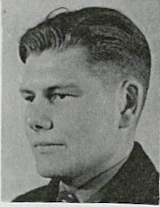
| Jim Mackenzie at right of photo (Charlton Athletic Museum) |
This blog usually concentrates on events and people from the Second World War but to commemorate Remembrance Week 2017, we look back at the 1914-18 conflict and visit the story of a young man who was one of those involved in the formation of Charlton Athletic FC and whose death took place one hundred years ago this year. This article is a modified version of a piece I wrote last year for the club's museum and is reproduced here with acknowledgements.
Even though
Jim Mackenzie was only fifteen years old at the time of the formation of
Charlton Athletic FC, he can now be rightly seen as one of the 'Founding Fathers' of the club and to commemorate the centenary of his death, it seems a good time to re-visit his story, which I have been able to update, having unearthed some more information covering his final days.
Although I no longer attend matches as regularly as in previous years due to the various issues connected with the club's ownership, they are still 'my club' and will always be so. Over the years, Charlton Athletic have gained a justifiably superb reputation for community involvement and for our awareness of the club's proud heritage and one such initiative is the excellent
Charlton Athletic Museum, an entirely self-funded charity founded and operated by a team of trustees and volunteers.
On an early visit of mine to the museum, my friend, fellow battlefield guide and Addicks fan, Clive Harris drew my attention to what was then a newly produced marble plaque which was to be added to the club's war memorial and which featured the names of the three Charlton Athletic players and officials who lost their lives during the First World War.
 |
| Detail of the Charlton Athletic FC Roll of Honour (Author's Photo) |
One name, or perhaps rather a
ship’s name, immediately caught my attention when looking at the finely crafted
plaque. This was the steamship Heron,
a name I recognised as being a vessel from the General Steam Navigation
Company, a London based short sea and coastal shipping concern that later
became a part of the shipping company for whom I once worked, the P&O Group.
So apart from the connection to Charlton Athletic, there was also a link,
albeit a slightly tenuous one to my first employer, with whom I had spent some
of the happiest working years of my life. I had to learn more.
Of course, it wasn’t just a
ship’s name on the plaque, for the Heron
was merely providing background to the story behind the loss of a human life.
The individual’s name was somebody who had been involved with the club
literally right from the very start, for he was none other than Jim Mackenzie,
the very first Honorary Secretary of the embryonic Charlton Athletic when the
club was formed by a group of young lads from the East Street area of Charlton in time for the beginning of the 1905-06 season and whose name
and home address at 5 York Street, Charlton was shown in the Kentish Independent
newspaper advertisement of 27 October 1905, as the person to contact for potential
opponents looking for a friendly fixture.
John Alexander Mackenzie, as his surname
suggests, was a Scot, born in 1890 in Dundee to parents William and Annie
Mackenzie. Jim, as he seems to have been universally known, was eventually the
eldest of five children, with a younger brother and three sisters. By the time
of the 1901 Census, the family had moved to 36 Cedar Grove, Charlton as Jim’s
father William had taken a job as a Dockyard Labourer, no doubt at one of the
many wharves that lined the Thames in the area at that time. By 1905, the
family had moved to York Street, today called Mirfield Street and which
connected East and West Streets (now Eastmoor and Westmoor Streets
respectively) at the heart of the area from whence the young players of the
newly formed football club were to be found.
Jim was Honorary Secretary of Charlton Athletic FC during it's formative years but
in November 1908 at the age of eighteen, he decided to join the Merchant Navy,
being engaged by the General Steam Navigation Company, often referred to simply
as the GSN, or ‘The Navvies’. Although the company’s headquarters were at
Trinity Square in the City of London, they also had a wharf and engineering
works at Deptford, at that time a short tram journey away from Charlton. Perhaps
it was the locality of his new employers, together with the relatively short routes
covered by the company that attracted Jim to this type of work, which would
have permitted him to watch at least the occasional home match when time and
voyage schedules permitted.
 |
| The s.s. Heron of 1920 - the replacement for the vessel sunk in our story (author's collection) |
The 1911 Census found Jim on
board the steamship
Heron, berthed at
Weaver’s Wharf, North Dock, Swansea, when his rank was Mess Room Steward. By
1915, Jim was still aboard
Heron and
by this time, his rank was shown as the Ship’s Cook. In those days in the
Merchant Navy, it was not uncommon for crew members to serve aboard the same
vessel for voyage after voyage, for if the seaman was good at his job and
conducted himself well, the Ship’s Master would encourage these men to form the
nucleus of a trusted and competent crew. We can therefore assume from his long
service with the company and aboard the
Heron
in particular, that Jim was both well liked and a decent Ship’s Cook.
Despite his somewhat nomadic life
at sea, Jim kept his roots in Charlton and surely must have kept in contact
with his friends at the football club he had helped to set-up during his periods of leave. In the 1911
Census, the family had moved to 93 East Street but by the time the 1913
Electoral Register was printed, the family had moved again to a newer and
larger home at 57 Delafield Road, adjacent to Charlton Railway Station and
ironically a short walk from what was to become Charlton Athletic’s future home
at The Valley.
The
Heron was the second of the company’s vessels to bear the name and was
an iron hulled steamship of 879 gross register tons delivered to the company in
1889 by Gourlay Brothers of Dundee, so coincidentally the
Heron had the same birthplace as her Ship’s Cook and was just a
year older. She was engaged on one of the GSN’s regular routes from London and
other UK ports to Oporto, carrying general cargo as well as having provision
for some passengers. Sadly, no photograph of the vessel seems to have survived
the passage of time. The third
Heron
was built in 1920 and although she was a larger vessel than her predecessor,
her general layout was quite similar and gives the reader a good idea as to the
type of vessel Jim served aboard.
The First World War saw the
emergence of a new form of warfare at sea in the form of the submarine. At the
beginning of the Twentieth Century, the submarine had been damned by many and
the opinion of Admiral Sir Arthur Wilson RN, who described submarines as “
Underhand,
unfair and damned un-English” was typical for the time. Attitudes changed however, and by
the outbreak of the War in 1914, submarines had been adopted by both the Royal
and Imperial German Navies as an integral part of their respective fleets.
 |
| Kapitanleutnant Walter Remy of U-90 (author's collection) |
German submarines made an immediate impact in the war, with one notorious incident in September 1914 seeing the loss of the British cruisers
Aboukir, Hogue and
Cressy with heavy loss of life. The repercussions the following
year of the torpedoing of the Cunard liner
Lusitania,
including the deaths of 128 American civilians, who at that time were citizens of a
neutral country, caused the Germans to scale back their submarine operations
for fear of further alienating public opinion in the United States and thus
drawing them into the war. The submarine flotilla was duly withdrawn from the
commerce war and was given strict instructions to attack enemy warships only.
However, on 31 January 1917,
with the war beginning to go against Germany and the effect of the Allied
blockade having a disastrous effect on food supplies, the Kaiser ordered that
unrestricted submarine warfare should be recommenced with immediate effect. As
a countermeasure, the British reluctantly instigated a convoy system, initially
only on the shorter supply routes to France and across the North Sea but later
extended to cover the Transatlantic and Gibraltar routes as well. The exigencies of war meant that
there were frequent alterations to loading schedules and diversions to convoy
assembly points.
The
Heron was no exception in being a part of the new convoy system and having loaded a cargo of coal at Newcastle, topped up with general cargo in London, the little coaster found herself at Falmouth on 27 September 1917 as part of Convoy OF6, which comprised of nineteen vessels bound for Genoa, Gibraltar, Alexandria, Savona, Tunis and Oporto, which was the destination of the
Heron, the smallest vessel in the convoy and the only one destined for the Portuguese port. The convoy sailed at 16:00 and was escorted by nine warships of the 4th Destroyer Flotilla under Commander Francis Twigg RN in HMS
Lysander, who was the Senior Officer in command of the escort, which comprised the destroyers
Porpoise, Hind, Achates, Cockatrice, Unity, Christopher, Brave and
Lyra. Considering the size of the convoy, this was a powerful escort on paper but it must be remembered that unlike their Second World War counterparts, the destroyers of this era could not detect submerged submarines whilst they were underway as their hydrophone systems would only work when the destroyers were stopped. The destroyers would therefore hope to catch the submarines on the surface and deal with them either using their gun armament, or as a last resort, by ramming. Conversely, the attacking submarines would often surface at night to sink their prey using their own guns and to avoid wasting torpedoes, which at this time, were not always the most reliable of weapons and could only be guided visually. A large destroyer escort was also required as ships would be detached to cover the merchantmen departing for their individual destinations along the convoy route.
 |
| Jim Mackenzie remembered on the Merchant Navy Memorial at Tower Hill (CWGC) |
On the night of 30 September
whilst crossing the Bay of Biscay, the
Heron’s
company sister ship,
Drake, was sunk by
the gunfire of
U-90, under the
command of 34 year old Kapitanleutnant Walter Remy. The
U-90 had only been commissioned at the beginning of August 1917 but Remy was an
experienced commander, who had previously commanded the
U-24 and who was already responsible for sinking over 31,000 tons
of Allied shipping when he took command of his new U-Boat at the Kaiserliche
Werft, Danzig. The
U-90 was quite a
large submarine for the time and displacing 998 tons, was actually slightly heavier
than the
Heron. She was armed with
six 50 centimetre torpedo tubes, four at the bow and two astern and carried
sixteen torpedoes. She was also armed with a 10.5 centimetre gun, with 240
rounds for surface attacks.
The entire crew of the Drake were able to take to the ship’s
boats and were eventually picked up the following morning but two hours after her
sinking, a single torpedo fired at close range from U-90 slammed into the hull of the Heron adjacent to the engine room and with
disastrous results. The impact of a heavyweight torpedo upon the small and
elderly iron built coaster must have been devastating, as the Heron with her cargo of coal, sank like
a stone. The Engine Room crew along with anyone else caught below decks would not
have stood a chance and of the crew of twenty three, there was just one
survivor.
 |
| The remaining members of the s.s. Heron commemorated at the Merchant Navy Memorial, Tower Hill (author's photo) |
He was a Japanese crane operator by the name of Higo, who had been
off duty and taking a bath when the torpedo struck. He quickly realised that
the ship was rapidly sinking and ran out on deck, grabbed a life belt and
jumped naked over the side. Higo later recalled that it was a beautiful night
with a calm sea and bright moonlight. He could hear the cries of other
survivors in the water but they were too far away to be visible. After about
twenty minutes in the sea, he was picked up by the submarine and a short time
later, whilst in captivity but safe aboard the U-90, he was joined by Captain Carter, Master of the Drake, who had also been picked up,
doubtless to try and obtain knowledge of the convoy and of the ships they had sunk.
The remainder of the Drake’s crew were later rescued by the escorts and other
ships in the convoy and landed at Gibraltar but of the other twenty two crew members of
the Heron, including the 27 year old
Jim Mackenzie and of the vessel herself, there was no trace save for a few
fragments of wreckage floating on the surface. Jim and his shipmates lay at
position 46⁰ 27’ N, 11⁰ 14’ W, some 300 miles southwest of Ushant, in the Bay
of Biscay.
 |
| The Charlton Athletic FC Memorial and Roll of Honour (Author's photo) |
The crew of the Heron represented the British Merchant Navy in microcosm, being a
very cosmopolitan bunch. As might be
expected, there were men from England, Ireland, Scotland and Wales on board but
there were also crew members from Denmark, India, Portugal and Sweden as well
as Japan. Coincidentally, apart from Jim Mackenzie, there was one other
resident of Charlton on board; Charles Davey the First Engineer was from
Eversley Road, whilst the ship’s Master, Captain RS Bristow hailed from nearby
Beckenham in Kent.
The
men of the Heron are commemorated on
the Merchant Navy Memorial at Tower Hill, a stone’s throw from the GSN
Company’s former headquarters at Trinity Square and where 12,210 British
Merchant Seaman from the First World War who have no grave but the sea are
remembered. Unfortunately, the panel bearing Jim’s name is located quite high
up on the memorial and is difficult to photograph well but is clearly visible
to those wishing to pay their respects.
The
poem “No Roses Grow on a Sailor’s Grave” could
have been written for Jim Mackenzie and his crewmates and it is a fine achievement by the Museum that one of the original ‘East Street Boys’ without
whom we would not have a Charlton Athletic, is now commemorated at the
home of the football club that he helped to set in motion back in 1905.
The Charlton Athletic
Museum is not connected to the club and is run by a volunteer team of trustees and helpers who are committed to preserving the club's heritage and history for a wider audience. The Museum is located within the North Stand at The Valley and is open on Fridays from 11:00 to 15:00 and on matchday Saturdays between 11:00 and 13:00.
Unpublished Sources:
Greenwich Heritage Centre - Metropolitan Borough of Greenwich, Electoral Registers, various
National Archives - ADM 137/2628 - Admiralty Historical Section: Records used for Official History, First World War: Convoy Records, Outward Convoys Falmouth OF1 - OF21
National Maritime Museum Archives - GSN/1/43 - Minutes of the GSN Company - October 1917
National Maritime Museum Archives - GSN/41/24 - GSN Newsletter issue 93
National Maritime Museum Archives - RSS/CL/1915/3444/12 - ss Heron crew list 1915
Published Sources:
Birds of the Sea: 150 Years of the General Steam Navigation Company - Nick Robins, published Bernard McCall, 2007
Business in Great Waters - John Terraine, published by Leo Cooper Ltd, 1989
The Story of Charlton Athletic 1905-1990 - Richard Redden, published by Breedon Books, 1990




.jpg)